
New CPR & AED Guidance: Inclusive First Aid Training & Female Manikin Practice at Blue Skies
At Blue Skies Case Management & Care, we’re committed not only to providing high‑quality support to our clients, but also to ensuring our team and the wider community have access to safe, inclusive, and up‑to‑date First Aid training. As guidance evolves, it’s essential that our practice follows the latest evidence and addresses real‑world challenges.
That’s why our Clinical Lead, Lisa, and our Trainer, Claire, have updated our First Aid training package in line with the newest CPR guidance, AED guidance, and adaptive first aid best practice. These changes are important, practical, and ultimately life‑saving, and we’re proud to roll them out internally and through our external First Aid training services. We regularly update both our training content and the equipment we use to make learning more realistic, accessible, and easier for everyone.
Why First Aid Guidance Has Changed
Recent updates from major first-aid and resuscitation bodies highlight new considerations for CPR and defibrillator pad placement, particularly around:
CPR when someone is wearing a bra (including underwired, sports, and padded styles)
Inclusive CPR for people of all genders
Building responder confidence in real-world situations
Importantly, new guidance reassures responders that AED pads can be used safely and effectively even when a bra is present, as long as the pads make proper skin contact. Read the full article outlining this updated advice so we can continue to embed best practice.
Lisa and Claire have reviewed all the updates carefully to ensure our training remains accurate, practical, and person‑centred.
1. CPR & AED Use When a Bra Is Present
Many people hesitate during an emergency because they’re unsure what to do when a bra is involved. Our updated CPR training now includes:
Clear guidance on when clothing may need to be adjusted
Practical steps for ensuring AED pads make proper skin contact
Reassurance that AED use is safe when a bra is in place, if pads can be positioned correctly
How to maintain dignity and modesty sensitively
Realistic scenarios that build confidence and reduce hesitation
This ensures trainees understand what is required and what isn’t, so they can act quickly and safely when every second counts.
2. Adaptive First Aid for People With Disabilities
Because we support clients with such a wide range of needs, adaptive first aid isn’t just an add‑on for us; it’s something we’ve developed, refined, and truly specialise in. This is one of the reasons Blue Skies Case Management & Care stands out. Many First Aid courses take a one‑size‑fits‑all approach, but real life and real bodies don’t.
Our refreshed training includes:
CPR considerations for people with limited mobility, postural support needs, or medical equipment
Safe repositioning techniques for individuals using adaptive seating, wheelchairs, or supportive devices
Communication strategies for people who may not be able to express distress verbally
Tailored first aid approaches for different sensory, cognitive, and physical needs
Claire has worked closely with Lisa to ensure this training is clinically accurate, practical, and truly inclusive. This adaptive focus is a core part of what makes our First Aid training unique and so valuable for teams supporting people with complex or diverse needs.
3. More Hands‑On, Confidence‑Building Scenarios
We know confidence is just as important as knowledge. The updated training includes:
Scenario‑based learning
Guidance on managing panic and pressure
Real‑world examples taken from the clients we support
Multiple opportunities to practise skills until they feel natural
Our goal is for every trainee to leave feeling capable, calm, and prepared.
Why These Updates Matter
This topic has gained national attention, with recent BBC News coverage highlighting the gender gap in CPR and the hesitation some bystanders feel when a person is wearing a bra and an AED is needed (read here). With new guidance confirming that AED pads are safe to use when a bra is present as long as pads achieve good skin contact, our training plays a key role in reducing hesitation and increasing responder confidence.
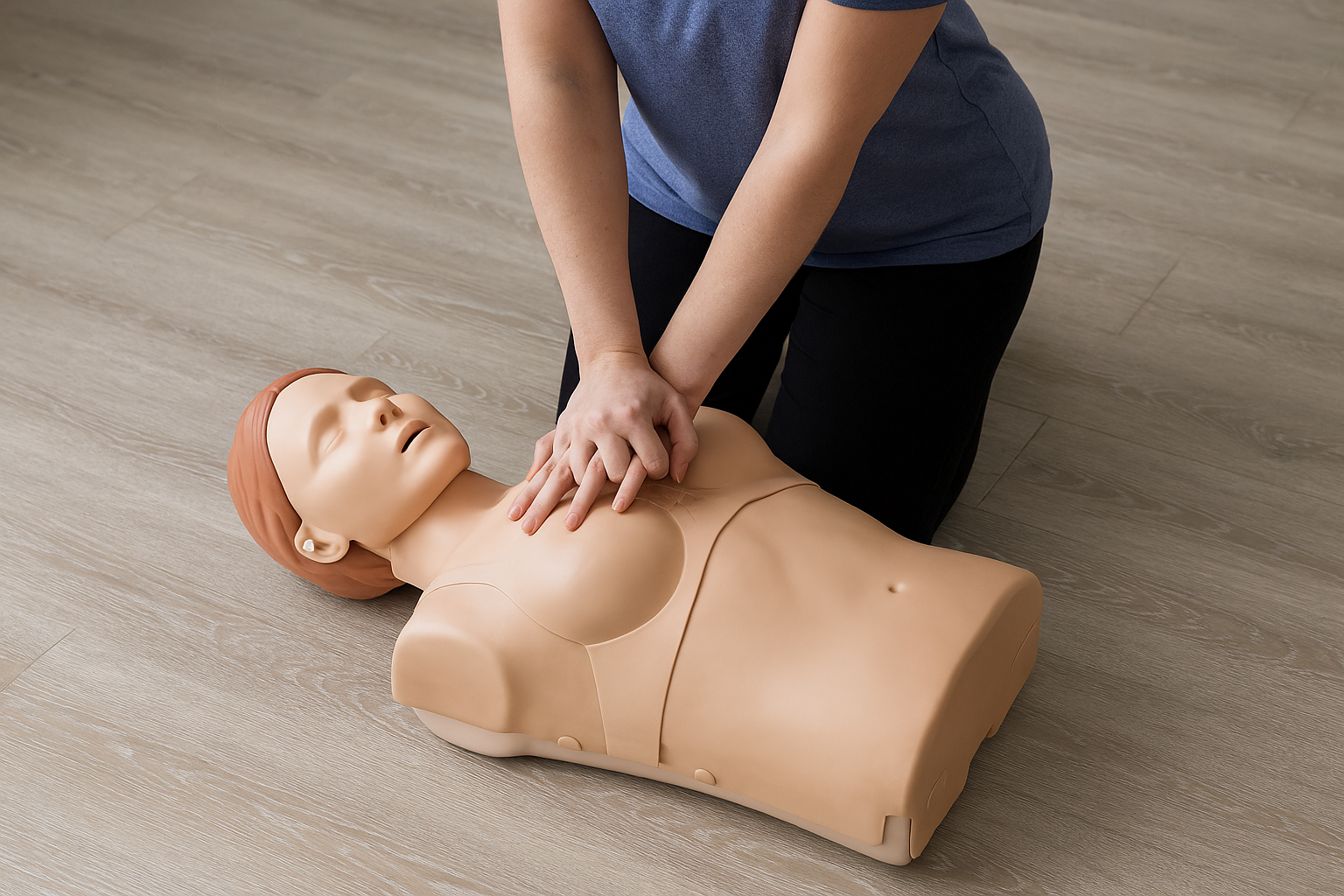
To support realistic and inclusive training, we’ve also introduced a female CPR manikin, allowing trainees to practise correct pad placement on different body shapes and ensure they feel confident supporting anyone in a cardiac emergency.
Medical emergencies don’t happen in controlled environments. They happen:
In parks
In shopping centres
In family homes
On busy streets
In schools
Around people with a wide range of needs, bodies, and equipment
Our updated training ensures First Aid reflects real bodies, real people, and real‑world situations, something we’re incredibly proud of.
We’re Now Offering This Training Externally
As part of our commitment to improving community safety, Lisa and Claire are now delivering this updated First Aid, CPR, and AED training for:
Support worker teams
Therapy and rehabilitation teams
Care providers
Solicitors’ firms supporting clients with complex needs
Community groups seeking bespoke First Aid support
Training is delivered in person and can be fully tailored to your organisation.
A Training Approach Rooted in Care and Expertise
With Lisa’s clinical leadership and Claire’s specialist training experience, our First Aid programme offers:
up‑to‑date clinical guidance
practical, hands‑on skills
inclusive, person‑centred teaching
clear, accessible explanations
scenario‑based practice
a warm, supportive training environment
Just as with our case management services, our aim is empowerment, giving people the knowledge and confidence to act when it matters most.
Get in Touch
If you’d like to book training for your organisation or want more information about what we offer, we’d love to hear from you.
Contact us at Blue Skies Case Management & Care
Let’s work together to create safer, more confident communities.